
Don't hate the media, become the media. Jello Biafra
Ryan Mackfall
The Birdwatcher
19. British Shorts, Berlin | 2026
JAN 22–28
THE BIRDWATCHER
Director: Ryan Mackfall
Writers: Ryan Mackfall, Lachlan Marks
Festival Screening:
Fantasy / Horror / Animation / Mystery / Dark Comedy / Thriller
Sat 24 | 23:30 | Sputnik Kino 1
Images © Myskatonic
JAN, 23, 2026
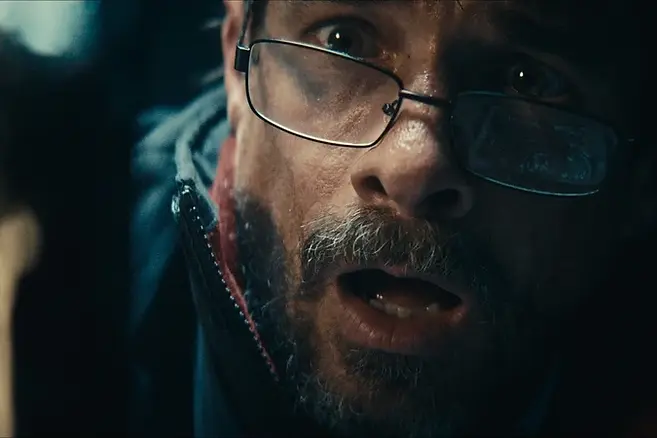
Investigators approach a bird watching hut deep in the forest following the disappearance of a grieving man. As they piece together his final moments, the evidence they gather becomes increasingly unnerving and hard to explain.
Hello Ryan, it’s so great to get to talk with you about The Birdwatcher, what does it mean be at British Shorts, Berlin with your short film?
It’s honestly the greatest of honours for The Birdwatcher and our production company Myskatonic to be a part of this festival. Berlin is an important city for me. It’s home to many people who are dear to me, and where many of the tours I’ve been a part of (filming with bands) have begun, over the years. The city has a feeling of freedom and inspiration that I’ve felt nowhere else. I’ve always wanted to live in Berlin but the chance hasn’t presented itself yet… it’s one of the cultural hubs of Europe, and a big part of European film. This is the first time a film of mine has premiered in the city so it’s exciting. A real landmark moment.
How important of film festivals like British Shorts in providing a creative space that celebrates and champions short film?
I think film festivals are more important than ever. They’re a place for people to enjoy short films on a big screen, for the most part without distraction, while also presenting the opportunity to be social and discuss the many different stories with others film lovers, face to face. In our modern world that’s actually a rarity now. We live our lives so much online and through devices, and it’s getting to the point now where I feel this is causing more harm than good. British Shorts feels like a bastion of culture in a strange period of history, sharing the work of British filmmakers to people who want to support the arts. This unique and special focus in Berlin is essential and necessary.
Filmmaker Prano Bailey-Bond, who screened NASTY at British Shorts in 2016, has had some pretty amazing things to say about The Birdwatcher, what has it meant to get this type of praise from a fellow filmmaker?
Prano has established herself through her work as an important voice in British cinema, her feature Censor is an amazing debut, and she’s not even got started yet! Cinema needs more voices like hers cutting through the noise! We share Celtic roots too, she’s from Wales, and I was born and work in Cornwall.
We got into Centreframe, and to be selected as one of the top 10 films of the competition by Prano, was huge. At times filmmaking can be quite an isolated affair – and her placing The Birdwatcher in her top 10 was a double win for me, not just because I have so much respect for Prano as a filmmaker, but because I got the chance to stop for a moment and look at some of the other amazing filmmakers in the category. It was a well curated mix and that speaks highly for her taste as a cinephile.
Last year The Birdwatcher was part The Independent Horror Society UK Tour, what was that experience like?
I’ve spent a lot of time on tour with bands, shooting music videos and documentaries - that’s kinda my day job and something I really love. The Birdwatcher ‘going on tour’ felt like a dream come true. The IHS team are an amazing bunch of people who work their asses off to support independent cinema within the horror space. How often do you hear about a horror film tour? I can’t think of any. Music touring in the UK is under a lot of pressure, let alone cinema, with many venues being shut down; so IHS pushing forward with their screening events is them putting their money where their mouth is, supporting filmmakers and contributing towards the dwindling arts culture of the UK. I will be eternally grateful for their faith in taking The Birdwatcher out on the road with the other awesome films. Touring is something I want to do more of in the future with my films. More filmmakers are making it happen independently. Ben Wheatley is currently on the road with his new film ‘Bulk’, and Geoff Barrow of Portishead has been touring his new film ‘Game’ which comes out via his new film company Invada Films. I think it’s just gotta be done. So IHS, thank you so much, you have my gratitude and support forever!
What’s that feeling like watching your film with an audience for the first time?
Terrifying. Producer Kingsley Marshall and I established Myskatonic back in 2019, and to premiere at the Frightfest segment of Glasgow Film Festival to a sold out GFT Theatre 1 was a dream for us. I was able to introduce the film to the 600 people in the audience! For the most part I try to turn off my feelings, something I’ve learnt when directing on set during tricky moments. It helps keep your focus without letting your feelings carry you off from what’s happening. There was a rush of adrenalin after the film finished, and I was taken straight off into an interview which gave me a moment to talk about lots of other things and forget that 600 strangers had just seen the film. Frightfest is run by some of the best people out there and being at GFF blew my mind. The film has since played all over the world, and won a number of awards, including our second HP Lovecraft Award in the US at Rhode Island, which was real special for us.

Was it always your intention to include students from Falmouth’s School of Film & Television, Fashion & Textiles Institute, and Games Academy in this production?
Contributing to the next generation is an essential part of our company’s ethos, and we’ve done this on all of our work at Myskatonic. On set experience is a great chance for students to observe and take what they want from the experience. I always hungered for real world experience and conversations in my filmmaking career from those more experienced than me, and I’m still looking for that now. To pay it forward for other filmmakers who may not have the opportunity is important for us. There is no one single right way to make a film, so everyone out there is looking for collective experience to make the best thing they can while developing their voice (whether they know it or not).
David Fincher said ‘I don’t think you become a director until you’ve reached 40, because you need life experience to really embody the role and know what you want to say’, but being able to offer that experience to others as part of their journey into the industry is really important. I also work a couple hours a week at Falmouth University supervising and working with undergraduate and postgraduate students on their final film projects and find that very fulfilling.
How valuable is this type of early exposure to a film production for emerging filmmakers?
I think it’s essential, but only to those who are really looking to seriously make their way in the world of filmmaking. You hear some people saying ‘you don’t need film school’ and maybe that’s true for them, but I studied at Falmouth (graduating in 2005) and the experience taught me a lot about my taste and gave me the fuel I needed to step into the filmmaking world. Falmouth opened the door for me to avante garde films as well as incredible filmmakers like D.A. Pennebaker; that was a moment I went ‘people make films about bands?!’ and the rest is history.
With Falmouth students, them joining our productions feels ‘right’. I see work experience positions as an important step for those who make the effort in their studying and seek to actively do more outside of their time in university. I look specifically for trainees who are punctual, reliable, calm and focused. I was never academically strong, but the desire to be a filmmaker was always powerful. I follow that rule when looking for trainees who are also collaborators. Passion seals the deal. The best trainees are the ones who can play a role in the daily task of solving problems we find on set or location. One of our collaborators Faith Glenister on earlier film has gone on to work with some terrific directors, on movies including Make Up, Barbie and Mickey 17, and one of my camera assistants Lily Coney has just worked on Robert Eggers new film Werewulf. She made the roads to that opportunity herself through dedication. She’ll hate me mentioning her but I know how proud we all are of her.
Can you tell me a little bit about how The Birdwatcher came about, what was the inspiration behind your story?
We’ve made a number of shorts and music videos at Myskatonic, and The Birdwatcher began life as a conversation with actor Craig Russell (who plays The Watcher). Craig is a great friend and has been in a number of music videos of mine but we’d yet to work on a drama script. He was bouncing around ideas over a coffee but wanted to work on something that revolved around him playing a central character under stress and highlighting mental health. It was through conversations with another friend, set designer Hugo Helene-Deeg, that an idea emerged around strange, isolated places like ice fishing huts. the notion of ‘the deep below the hut’ stayed with me. Then surfaced the idea of a horror film in a birdwatching hut. That’s where the meshing of the idea began.
The film ended up is as a canvas for me to project my discomfort and sorrow I felt from Brexit. It was such a traumatic experience as someone who identifies themself as European and who has always enjoyed travelling and working on the continent. Ultimately, it’s a narrative that concerns forced displacement without freedom of choice… I wrote an overview of the film and then coincidently my friend and collaborator Lachlan Marks asked if I had any ideas for a short film he could collaborate on. After a few drafts and many back and forth zoom calls we ended up with the film.
What was it like working with Lachlan Marks on the screenplay?
Lach is one of the most gifted people I’ve ever met. We work together so well and before we’d even touched The Birdwatcher we were co-writing a HP Lovecraft feature together, based on Whisperer in Darkness, and we’re seeking production finance for that right now. We met through another producer who got him in for a script re-write on a music video and we instantly hit it off. He’s a rising star, another short of his called ‘DIY’ is doing the rounds on the festival circuit. I’m really looking forward to us working together more in the future.
Do you like to stick to the screenplay once you started shooting or do you give yourself and cast some flexibility?
I try and stick to the script as much as possible, but sometimes you have to pivot and change things due to any number of factors. I dedicate myself to making the best thing possible with what’s at hand and that includes the options that present themselves in the moment! I think in the early stages of anyone’s career it’s good to stick to the plan as best you can, make mistakes and finish the project - sticking to the script can facilitate that well. Then in the aftermath that you can consider the decisions you made and what you’ve created.
What was the hardest scene for you to film?
The hardest was the boat scene. We shot in January. Craig Russell (The Watcher) was wearing a wetsuit under his clothing due to the temperature of the water. We shot three takes of him surfacing and then we got him out of the water. We had a full safety boat crew, dive team and water camera operator. and he managed to nail it. When you’re doing anything in water things are made much more difficult, so for us it was the trickiest part of the film.

How important is the creative collaboration between you and your team when working on a short like The Birdwatcher?
Collaboration is huge for me. a film is a collaboration between everyone involved, with the director as the tastemaker at the top. Of course there’s a lot of the director in the film, especially if they’re written and developed the idea, but a film needs an army to make it happen, especially if it’s a high concept. I’ve got an amazing group of people around me who are joining me in my first steps into feature filmmaking. A few of them I met through the music industry, some are in bands and others were crew working other areas of the creative visual process or the music production side. I think it’s important to bring people up the ladder with you as you progress. You gain a lot because everyone is familiar with the way the team works which makes it a bit smoother. The Birdwatcher had a lot of amazing people working on it, including around 40 trainees. A special mention to my production designer Lee Evans who shaped the look of the film - he’s worked with me on a lot of my music videos and has been a key factor in my development, acting as a mentor through many difficult moments. I just feel so grateful and privileged to have a team like I have. I’m really excited for the future and see who else comes into the mix!
Where did your passion for filmmaking come from?
I’m the first person in my family to work in a creative profession, but I’ve grown up around amazing and passionate people who made their ideas a reality. My parents are run their own business and I watching them do their own thing planted seeds in me from an early age. Filmmaking was something that I was drawn to even before I knew it was a profession. I had access to a family VHS camcorder as a kid and began messing around with it at a young age (even breaking one of them, sorry mum and dad!). I would make stop motion short films with toy figurines, and then began shooting short comedy sketches with my brother and sister. Directing was something I always ‘knew’ how to do in its most basic form. In junior school I directed a couple of comedy sketches for the school talent show and people laughed and enjoyed them - it just felt natural.
I made skate films in my teens and 20s, and got inspired by a lot of the skate videos of the time, along with films from people like Tony Scott and Tim Burton. I was interested in sci-fi and fantasy but didn’t have anyone older to guide me so it was a slow natural process of finding what I liked as I got older. Eventually I chose to study media at college, and then enrolled in the film degree at Falmouth University. After graduating I started my own production company ‘Crashburn’, and started to film hardcore, metal and punk gigs. At the time social media was just starting so I’d put the videos on YouTube or Myspace. Many people thought it was a fad and wouldn’t work, but flash forward and I’ve directed shoots all around the world, in the last year or so shooting Green Day at Wembley Stadium, and more recently directed a Nicole Scherzinger show at the Royal Albert Hall. The music industry has been a good training ground for me, but my dream has always been feature films. I feel like I’m entering a part of my life where I’m ready for that task. My film education is ongoing, and I’ve gone from looking up to legends like Tony Scott, to being inspired by Berlin’s beloved Wim Wenders or filmmakers like Jonathan Glazer. I’m feeling more passionate than ever about the craft, especially when my film makes it into a festival like British Shorts.
What would you say have been the most valuable lessons you’ve taken away so far from your films?
I live by the premise of ‘work hard and be nice to people’. That doesn’t mean being a doormat, it means having good intentions, respecting others, and being dedicated to your craft. Overall though here are some of the things I’ve taken away from my time as a filmmaker:
When you start out you’ve got to try to not think about the money, just think about the ideas. Remove as many limits in your mind as you can. Work with people who have a similar mindset and make things happen with what’s around you. Don’t consider your location as a ‘factor’. When I began many people said that because I was from Cornwall it wouldn’t be possible to be a filmmaker. This was a falsehood. You can do anything from anywhere. You just need to believe in it and DO IT!
My other recommendation for filmmakers is to look towards David Lynch. Through Lynch I began meditating, doing breath work and changing my outlook to life. It changed EVERYTHING and has been hugely beneficial to not just my creative process but my overall life.
How much does your background in music videos helped inform your approach to your short film?
I pretty much have the same team in music videos at Crashburn as I do in drama shorts at Myskatonic. In fact, my proactive approach since 2020 has been to approach music videos in the same way I approach short films. We’ve done some amazing stuff for various different artists. From this I’ve sort of got the reputation as ‘one of the people to go to’ if a band want a short film style music video in the UK. I’m happy to take that because for me they are the most enjoyable type of music video. Stylistically I’m influenced by the rock and metal music video channels of the early 2000s where music video ideas were still quite broad and interesting. I’ve been on a mission to try and emulate that period and revive the value of short film style music videos, but they aren’t always what people want. I’m lucky for the most part though to collaborate with a number of commissioners who care deeply about the videos their bands put out - they think about making something memorable more often than the money. It’s a joy.
Music videos have also been extremely instrumental when it comes to the cutting process in the edit. The process I follow with a music video is very similar to that which happens with my short films. The reduction process is very specific and you always know when you’ve gone too far or not taken enough. My overarching principal with my work is ‘this is a film’ and that mindset is incredibly helpful in developing skills next to your own voice. Each opportunity to create and learn is embraced and seen as a step on the road to making a feature.
"Resisting the lessons of life leads to a dangerous place and the universe loops situations in a desperate hope that the person will rethink the moment."
What filmmakers inspire you, and if you could spend the day on set with one filmmaker who would it be, and why?
There’s a large list! The filmmakers who inspire me most are Jonathon Glazer, David Lynch, David Fincher, Frederico Fellini, Liv Ullmann, Andrei Tarkovsky, Wim Wenders, Ingmar Bergman, Kathryn Bigelow, Carol Reed, John Huston, Alexander Mackendrick, Michael Balcon, Basil Dearden, Michael Powell & Emeric Pressburger, Orson Welles, Tony Scott, Steven Spielberg and Denis Villeneuve.
What themes are you hoping to explore with future films?
We’re raising finance for my first feature as a writer/director – ‘C-H-A-I-N’ - and I’m working on a second feature screenplay with the working title ‘Analogue’, which is a post-AI ghost story. With Lach we have our adaptation of the HP Lovecraft short story ‘The Whisperer In Darkness’ and we have a film that Kingsley is writing with Lucy Grace, adapted from her short story There Were Nine Children Left. Many of our films discuss and meditate on the nature of people resisting/fearing uncomfortable human situations; only to learn that we have to go through those uncomfortable moments in order to grow and become better people. I feel like the world is obsessed with nostalgia and looking back which is a huge problem in society. In one respect I can’t blame anyone, because the world is in a very unstable place. Most of the issues can be linked back to one simple thing - poor mental health. Resisting the lessons of life leads to a dangerous place and the universe loops situations in a desperate hope that the person will rethink the moment. It creates situations of extreme pressure and sometimes danger - I think I’m interested in these places… I know that most of my shorts are about displacement and going to forbidden places and The Birdwatcher is the final part in a displacement trilogy, which includes Backwoods (a HP Lovecraft adaptation), and South of Here (a Neo-western noir written by Tim Seyfert).
Are you able to share anything about your upcoming feature debut, which is going to be produced by Kingsley Marshall?
Of course. C-H-A-I-N is a supernatural eco-folk horror that fuses time travel with the catastrophe of climate change and biodiversity loss. It’s a whodunnit mystery wrapped across timelines in the life of moorland ranger Agnes who is taken from her home in the UK all the way to the jungles of Peru to find the answers behind a recent loss. We’ve developed it over the two years and we’re now looking for production finance, and have had some interest.It’s a story that, although is entirely fictional, speaks quite deeply to my own experiences with grief and loss. It’s largely a female fronted story and I’ve got a strong most favoured cast in mind for it, with the main lead already expressing interest in reading the screenplay after a brief conversation about the story. It’s likely to be the first feature film that production company Myskatonic will produce. Right now, we’re in post-production on documentary commission from Hammer Films, and have a number of other projects that are in development with some wonderful writers on a ghost story series for TV, and working with a US production company on a Fact-Ent TV show from Canada. It’s an exciting time!
Best piece of advice you give first year film students?
Be punctual, be kind, be curious, get excited and make the effort to ‘do’ as often as possible. Most importantly of all believe in yourself even if no-one else does, because you need to be your biggest supporter in this game.
And finally, what message do you how your audiences will take away from The Birdwatcher?
Beware of ordering books that come with powerful gifts.