
Don't hate the media, become the media. Jello Biafra
Katia Lom
Ghosts
XXI | ÉCU FILM FESTIVAL | 2026
24-26 April
Les 7 parnassiens Paris
GHOSTS
European Experimental Film | 7,30min | UK
Directed: Katia Lom
Writer: Katia Lom & Patrick Miles Widdop
Images © Katia Lom
APR, 13, 2026
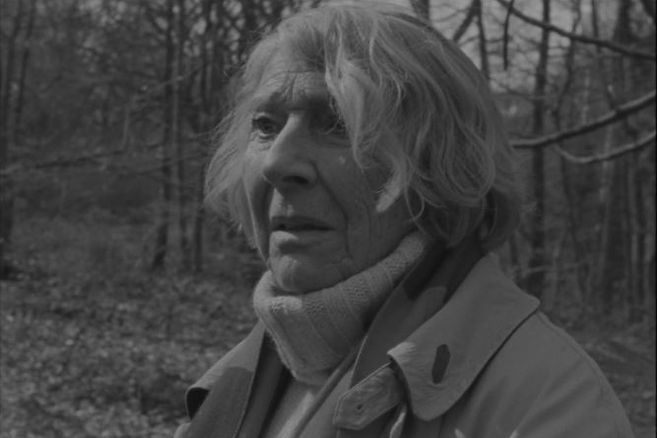
Memories are with us. They stand as objects from the past holding us in the present. We are unable to escape them despite the passing of time. As we attempt to elude history our memories always return and exist as truths in the present. A woman at the end of her life wanders lost in the woods and her memories find her.
Hey Katia, it’s a real pleasure to talk with you ahead of this years festival. What does it mean to have Ghosts to ÉCU in Paris?
So special! I still can’t quite believe that our film is part of this festival and is sharing the programme with so many beautiful and impactful films.
Ghosts was supported by Kodak Film Lab, as an independent filmmaker what did it mean to you t get this type of support for your short film?
On a financial level it was a godsend. I am not quite sure that we would have been able to shoot on film without their support. On a creative level, Kodak Film Lab were supportive throughout the production. I could not recommend them enough. Everyone at Kodak Film Lab is passionate about film and wants to see films made. It was a great experience.
What's been the most exciting part of sharing your film with festival audiences?
I am very curious to see how people read the film, experience it and connect to it. There is also a key scene in the film showing scenes in Paris in WW2. I was hoping we could get a screening in Paris, and so screening at ECU is like a dream.
If you could describe Ghosts in a sentence what would you say?
It is a short film combining contemporary 16mm footage with original historical archives that blurs the boundaries between past and present, reminding us that while we attempt to look away the truths of history remain ever-present.
Tell me a little bit about Ghosts, what inspired your screenplay?
I had been working as an Archive Researcher and Archive Producer on documentaries where I discovered the vast public domain archive catalogue at the National Archives in the United States. This material is available to use for free, available to download online, many of it as well available as masters (although that is a slightly harder task but still possible). I was struck by the beauty of the material and how modern much of it felt, as footage from WW2 onwards is shot on 16mm and 35 mm at around 25fps. In essence, it looks like what you would shoot today if you took a camera. I had been meaning to find an opportunity to use this archive material outside of the context of a documentary, particularly as I found that so much footage from WW2 resonated with our present times, some images almost echoing those emerging from the news of armed conflicts across various countries today.
What was the process like co-writing your screenplay with Patrick Miles Widdop?
Patrick and I have worked on three short film projects together before starting to work on “Ghosts”. We have developed a close working relationship that is very organic. The screenplay emerged out of the editing process. We had a shoot with Fiona Walker prior to the edit, with whom I developed a scene. And then we gathered material from the National Archives and we began to cut a story together. We let the images and how we reacted to them guide us in creating a story. It was a truly collaborative process.

How close did you stick to your screenplay once you go into production?
For all my films I would say I begin with a strong feeling. It is this feeling that drives me to want to make a film, and then everything in the production works towards creating that feeling. But then how we get there is open and can move, within the constraints of each project. In this instance for “Ghosts” we did not have a screenplay but a “task” or creative prompt to create a film out of the material we could find in archives and the scenes we would shoot with Fiona. But within those constraints we had freedom to create a story as we felt held true to the intent behind the project.
When did Fiona Walker get involved in the project, what was the process like working with her on this short film?
Fiona got involved early on in the project. She was the first person attached to the project. She was instrumental in the film being what it is. We worked together to build her character and her world. I set her some specific tasks ahead of the shoot and then she built a scene for herself around that. We spoke at length about why I was making the film and her own relationship to the themes. These conversations very much set the tone for how the film came to be. It was really special to work with her. It is one of the reasons I love working with actors as they become important parts in the creative process of making the film and become collaborators.
What has been the biggest challenges you've faced putting your film together?
Time and money. I hate to say it but it is true… It can become a challenge slipping in time to edit a film and keep at it when you are in the middle of other projects and life happens too. To keep the momentum going and the motivation without any other reason than because you want the film to come to life can be hard when other pressures come to fight against it. But it is also what makes it exciting to make.
How essential was the creative collaboration between you and your cinematographer Matt Gillan and editor Patrick Miles Widdop in creating the right look you wanted for Ghosts?
Both were essential. Patrick is a wonderful editor. My films would not be what they are without him. Matt was also instrumental in creating the world we needed in the film stock for the scenes with Fiona. Matt has a great presence on set which makes the shoot very comfortable and collaborative.
What was the message you wanted to say with Ghosts, and do you think you achieved it?
I wanted to create a film to create a space for reflection. I hope this has been achieved, but that is out of my control. I am ok with that.
Where did your passion for filmmaking come from?
I had been working with elderly people, developing art projects for and with them, in local authorities and community centres in Islington. Through this work I landed a role at the care home “Denville Hall” in Northwest London, a care home for retired actors and members of the film and theatre professions. As part of my job I had to screen three films a week, watch the films with the residents and facilitate informal post-screening discussions with them. This process opened my mind to the craft of filmmaking. I also realised how much I love actors, their working processes and their awareness of the world in general across art forms and disciplines.
You’re an NFTS alumnus, how much did your time on the National Film and Television School MA in Directing Animation programme prep you for your filmmaking journey?
The NFTS is unique in that although it is a school it functions as a production company. No one will hold your hand. If you want something or have a vision you need to find a way to make it happen. The lessons learned through this approach helped me prepare for what lay ahead beyond the NFTS. Robert Bradbrook who led the MA in Directing Animation course created an amazing programme of lectures and workshops in the first year and was a wonderful tutor and creative producer across all of our graduation films. I also have to pinch myself that through the NFTS I got to meet and have meaningful interactions with filmmakers I admire, such as the late Terence Davies, with whom I got to speak to and correspond with on several occasions about the craft of filmmaking, which really helped me in my journey as well. Ultimately, the real strength of the NFTS are its students. At the time I went to the NFTS it was still a fairly small school, with a handful of MA programmes only accepting around 8 students a year. Having a small community of such talented and passionate people altogether for two years was really special. It is at the heart of making films: bringing a community together to create stories.
"I also realised how much I love actors, their working processes and their awareness of the world in general across art forms and disciplines."
What has been the most valuable lesson from making Ghosts?
The creative process and the community you bring along with you through the journey of making the film is what makes the film.
What do your films say about you as a filmmaker and the types of stories you want to tell moving forward?
That the past informs our present and lives with us. I hope can continue to feel free in how I make films and tell stories.
Who have been your biggest inspirations?
The late Philip Grout, an actor and director who I got to meet while working at Denville Hall, has been a major inspiration, and I know I am not alone in having had the privilege of his friendship. He was a wonderful teacher, artist and person.
Terence Davies was the filmmaker who opened my mind as to what filmmaking could be. I will never forget watching a “A Quiet Passion” and the profound effect it had on me, particularly in how it brought a conversation between images, music and text to create a universal whole, so that you left the cinema with a feeling and ideas to ponder upon rather than having seen a “story”. Across his films, his use of memory, archives and his sense of place made me realise what films could do and could be.
I have also been very much inspired by Stanley Kubrick’s “The Shining”. I know it is descried as a horror film, but it doesn’t feel that way for me at all. It is one of the most deeply moving films I can think of and one of the finest I’ve seen.
Any advice or tips you would offer anyone wanting to get into filmmaking?
Throw yourself into it and do it! I made my first animation film with photocopy paper and felt tip pens I bought from Tesco. I then made the soundtrack banging things around in my kitchen. And don’t be afraid to ask for help and contact people you dream of working with. And watch films of all sorts, from recent releases to silent films, from the classics to the unknown.
And finally, what do you hope people will take away from Ghosts?
I don’t have any hopes other than that the audience may leave with something.